You Will Find Your People Here
In October 2022 the Polygon invited Vancouver collective MadeByWe to host an event exploring the themes "investigating Canadian Blackness" and "Music is the Weapon" as part of Stan Douglas' exhibition 2011 ≠ 1848. In this illustrated essay, Olumoroti Soji-George reflects on the importance of community and music in the collective queer and BIPOC-centring activities.
A couple months ago I was invited to a party at Fortune Sound Club by Hafiz Akinlusi, one of my colleagues at the Black Arts Centre and the co-director of community-building and event-organising collective MadeByWe. I’d had reservations about Fortune from past experiences – not having felt comfortable or welcome there as a Black queer man – but Hafiz assured me that this was effectively taking place in a different venue: a special project space inside Fortune separate from the main club. MadeByWe was hosting the event, called TNA. Sure enough, immediately upon entry, there was no doubt in my mind that this party was entirely different from the one going on upstairs.
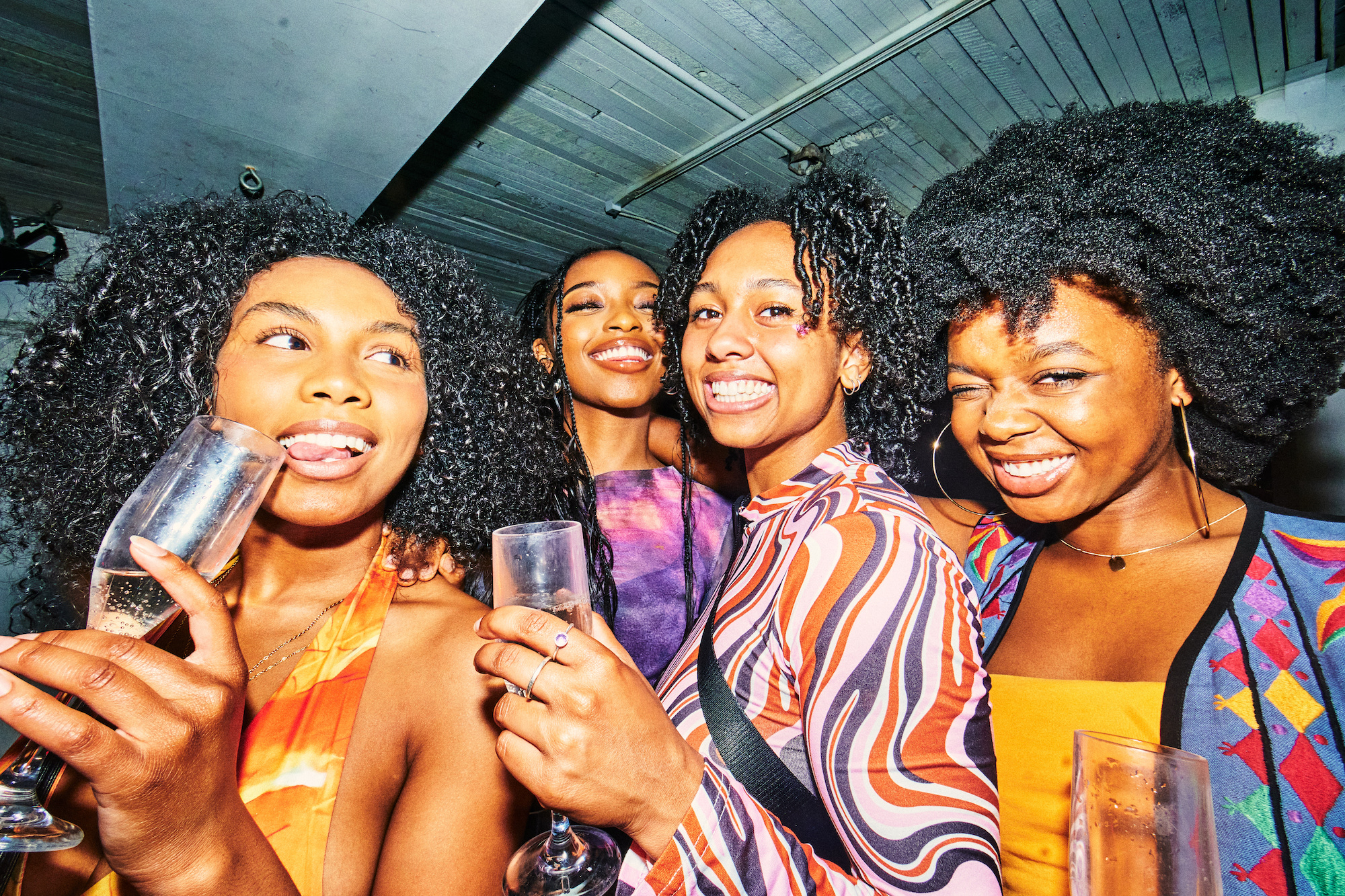
'TNA', MADE BY WE, July 2022 Photo: Simone Chnarakis
Surveying the dimly lit room, I could see people dancing, socializing, waiting in line for drinks – all the typical activities you’d expect at parties. What made this special for me, however, was the feeling that I was welcomed, and truly free to enjoy myself. A large number of TNA attendees were Black queer folks who I’d seen on Instagram or out and about in the city, but had never had the chance to meet or speak with offline. I recall how exciting it was to finally meet my online acquaintances, how we fawned over each other’s’ outfits, joked about our social media presences, and listened to one another eagerly as we drifted through topics ranging from SSENSE purchases to the state of Blackness in Vancouver. From on the composition of the crowd and the lack of awkward stares, to the compliments I got for my outfit (a heavily cropped polo top and baggy jeans) and the overall energetic, very Black vibe of the event, I could tell that the event organizers had taken great care to create a safe, familiar, and comfortable atmosphere for their guests.
This atmosphere owed much to the dazzling lineup of Black femme DJs who dictated the tone of the night, playing music that ranged from hard techno, to bubblegum pop, to hip hop. When I first walked in I’d glimpsed a Black woman sporting a pink wig in the DJ booth, spinning lively reggaeton on her CDJs.
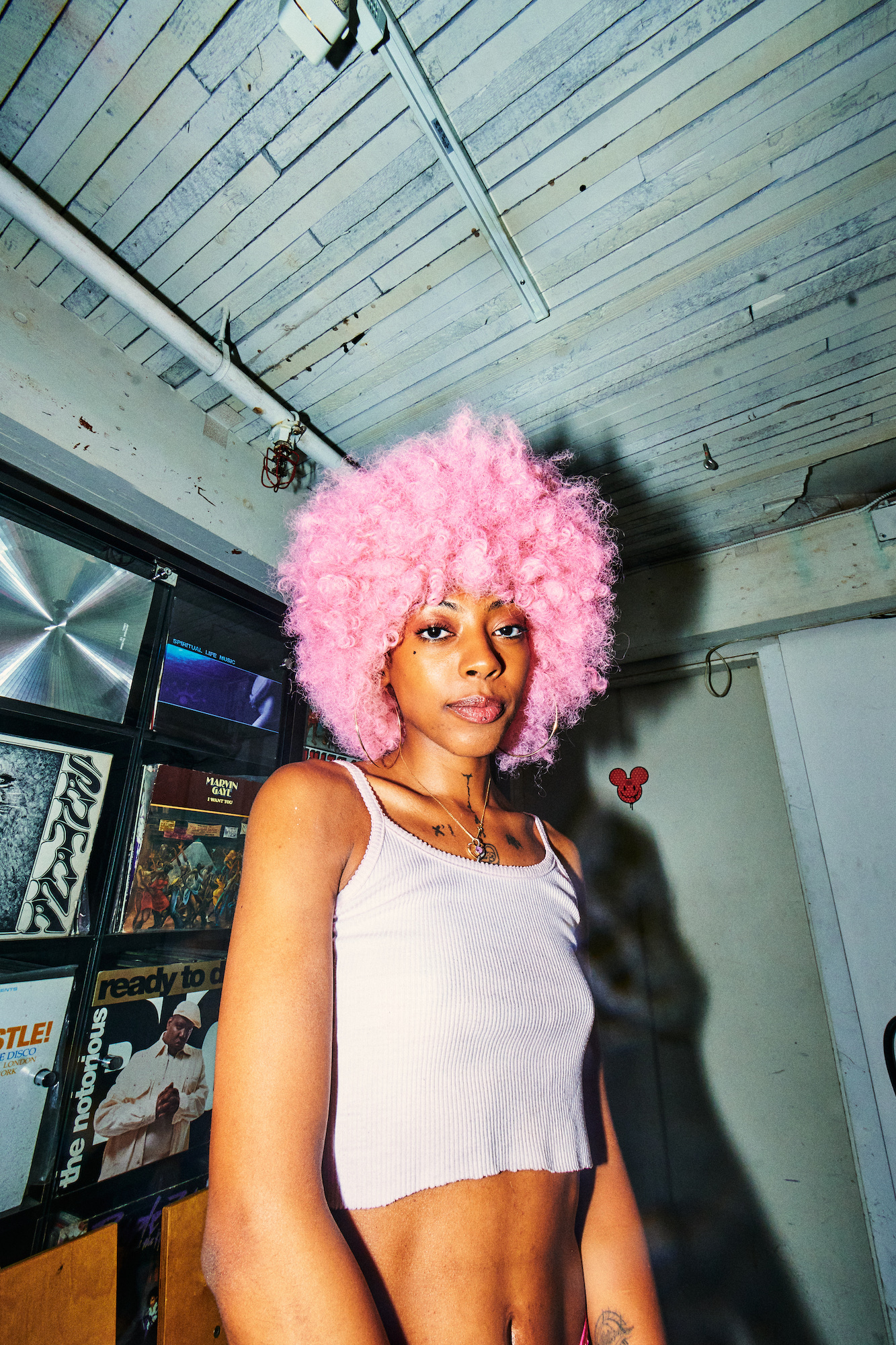
'TNA', MADE BY WE, July 2022 Photo: Simone Chnarakis
A standout moment of the night was the twerking contest, which brought intense joy to the dance floor. It was inspiring to see Black women express themselves freely and confidently, without fear of their bodies being objectified or sexualised. The contest was powerful to witness, and even political in nature, considering the histories of misogynoir and appropriation of Black culture – especially Black dance – in Western societies. In such contexts, twerking is variously a spectacle or a subject of moral debate; seldom acknowledged are the dance’s historical roots, including bounce music from New Orleans, itself an example of embodied knowledge and Pan-Africanism, with nods to Congolese and Ivorian dance styles. The TNA twerking contest afforded us a moment in which Black femmes were celebrated for their self-expression, heedless of the connotations elsewhere imposed on their bodies and individuality.
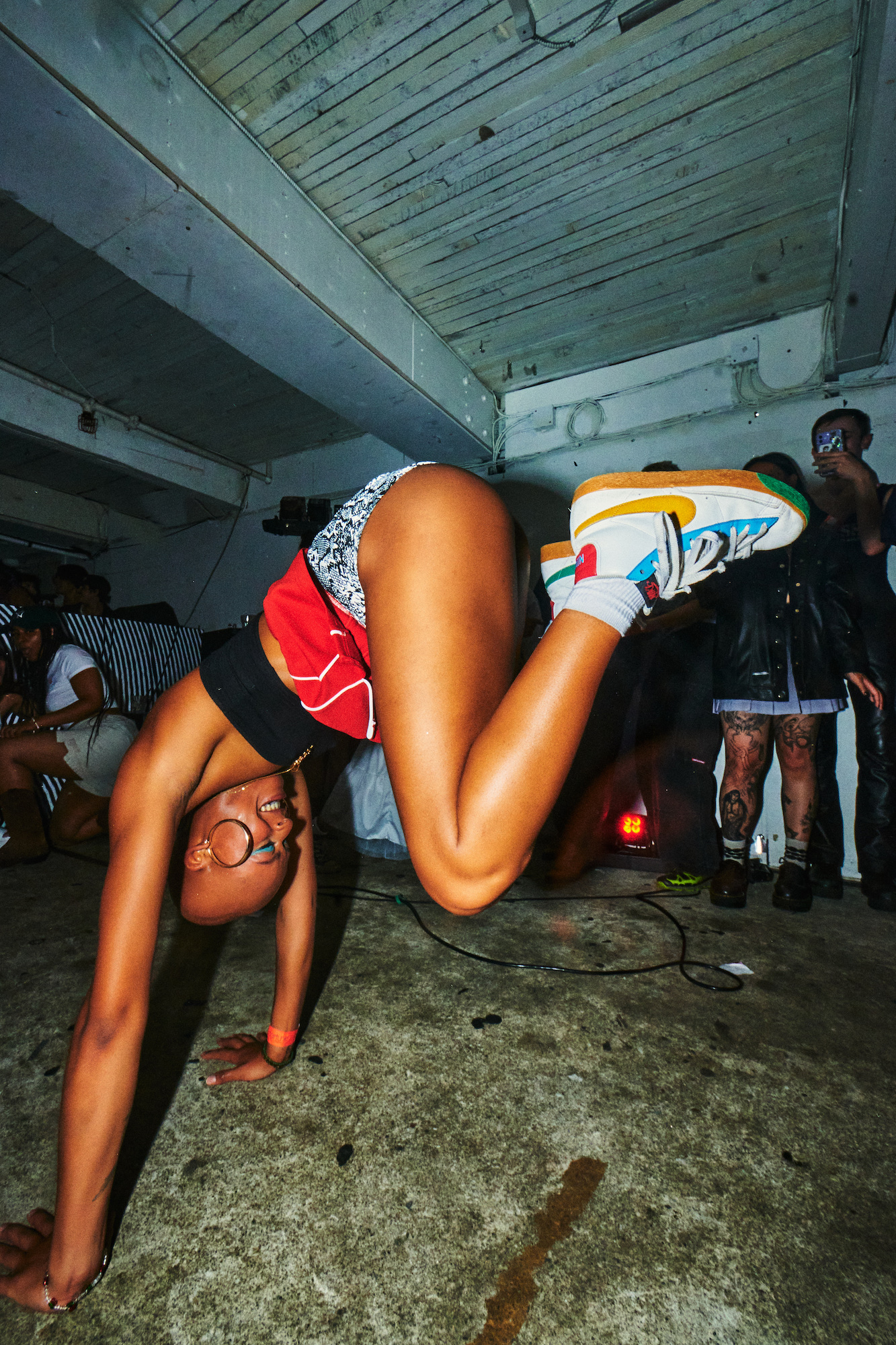
'TNA', MADE BY WE, July 2022 Photo: Simone Chnarakis
For Black people in the motherland and across the diaspora, music provides a creative apparatus to mark one's identity, tell communal and individual stories, harness artistic potential, and develop experimental aesthetics that refuse colonial notions of refinement or properness. For Black people and many other minority groups, music is a means to perform and personify both resistance and discontent within a given hegemonic society. It opens channels for fresh ideas and necessary action.
Given to the significance that music and its creation holds for individual members of the Black community, it has been vital to establish venues and creative spaces where music by Black artists can be shared and celebrated. What the underground jazz clubs and speakeasies in the Harlem Renaissance and large spectacular "owambes" in current-day Nigeria have in common is the sense of togetherness that these gatherings nourish, and the freedom to “come as you are” that they encourage. MadeByWe has begun to do this too, here in Vancouver.
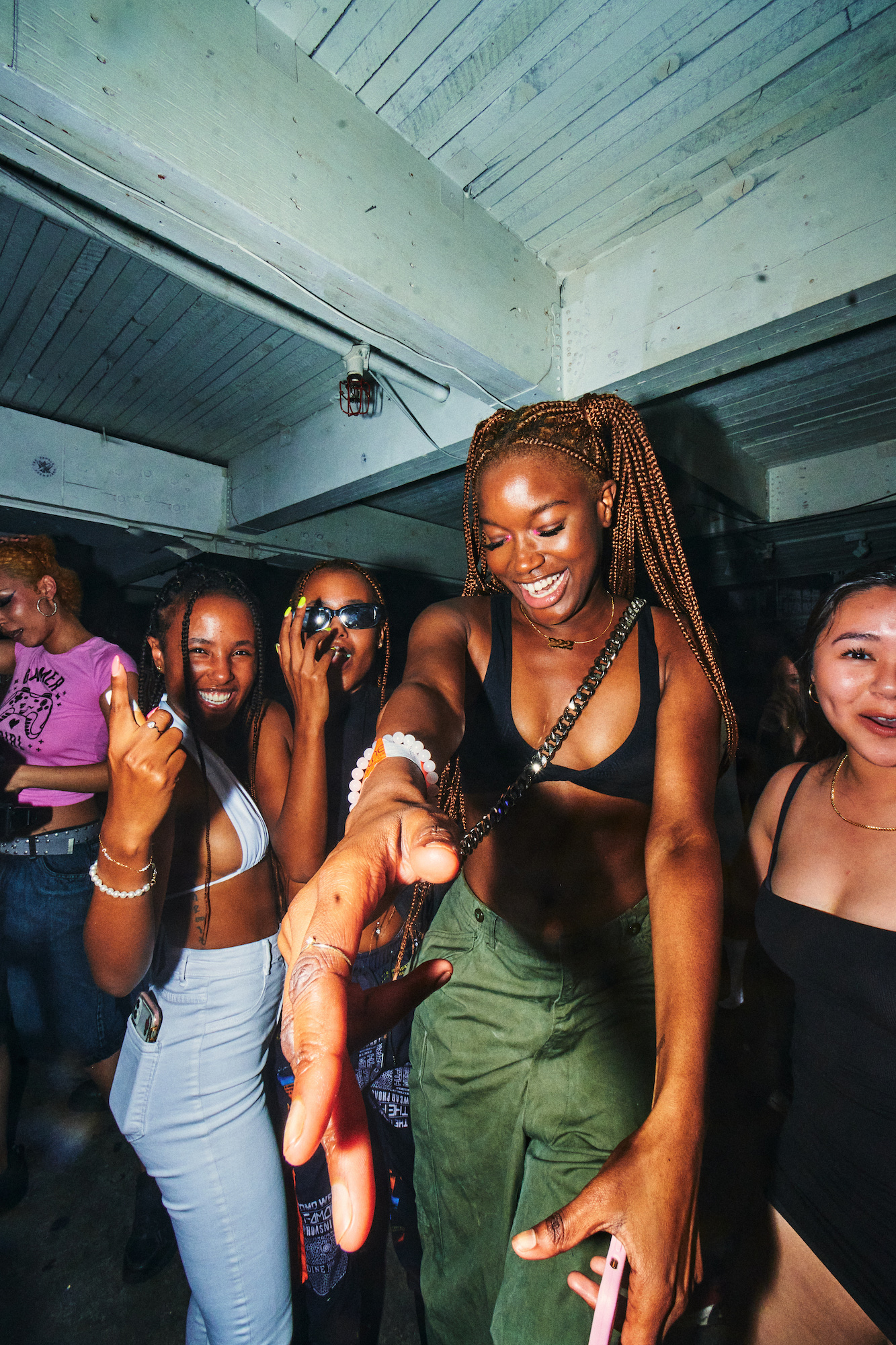
'TNA', MADE BY WE, July 2022 Photo: Simone Chnarakis
Of course, an essential aspect of Black nightlife culture is the DJs and performers who showcase creative cultural production. I notice how Black DJs fulfill roles as entertainers, promoters, and technicians in the spaces they create and maintain; their work is at once artistic, logistical, and communal. They are leaders, often widely known by the members of the Black community in their locale.
Perhaps one of the most significant yet under recognised jobs of the DJ is the dissemination of inherited cultural knowledge, present most notably in the form of sampling. Sampling by Black artists exists in contrast to cultural appropriation by non-Black artists; while the latter acts as an incessant mechanism of cultural exploitation of Black creative labour and erasure, the former has been used by Black artists in the motherland and across the diaspora to reassemble fragmented histories and knowledge that we’ve lost or had limited access to. I see Black DJs as historians, and music as their vast archive.
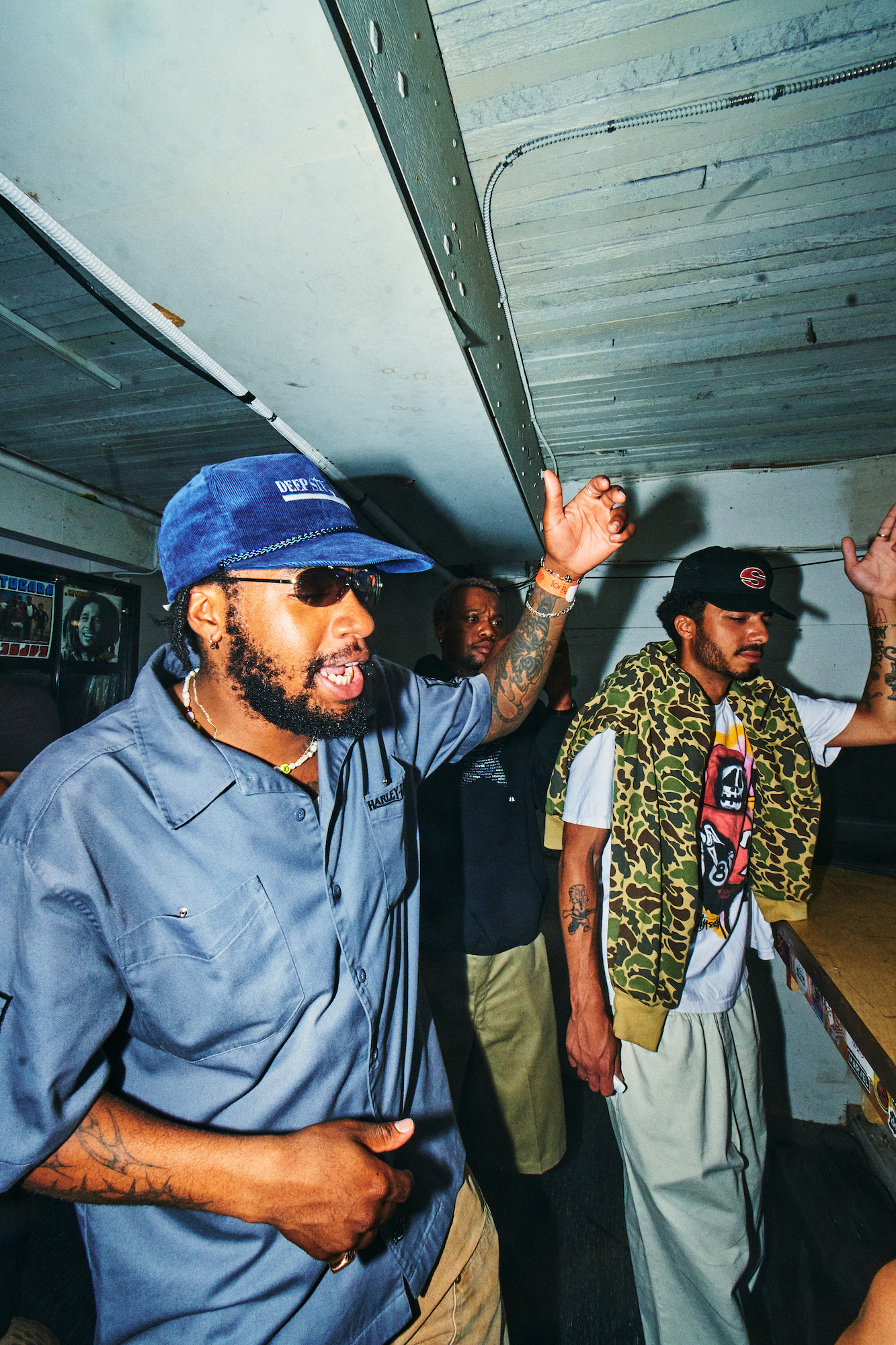
'TNA', MADE BY WE, July 2022 Photo: Simone Chnarakis
To this end, as I try to convey the significance of MadeByWe in our current sociopolitical climate my mind keeps returning to Deanna Bowen's King Studio Photos series. The project comprises 12 photo negatives shot between 1960 and 1969 at the now-defunct King Photo Studio, each featuring Black burlesque dancers and musicians that lived and worked in Vancouver. Beyond the politics of Black cultural participation in the city that Bowen highlights in her re-examination of these found images, they act as a tribute to the extravagant, community-oriented, creative, defiant, and emblematic elements of Black nightlife culture, something I feel has been missing in the often-disenchanting nightlife scene in Vancouver.
TNA was as an ode to Black femininity and the many unacknowledged contributions that Black femmes have made within popular culture across the globe. I had an unforgettable time, but as I walked home I couldn’t help but feel frustrated that there weren’t more events like it. It dawned on me how systems of misogynoir and white, male-chauvinistic supremacy are so pervasive even in Vancouver’s cultural landscape that the talent of these Black femme DJs, capable of engineering such a spectacular night, could go unnoticed and under-appreciated. Sparse opportunities for them to perform means sparse opportunities for the young Black residents of this city to connect, to learn, to experience the sort of joy that I felt.
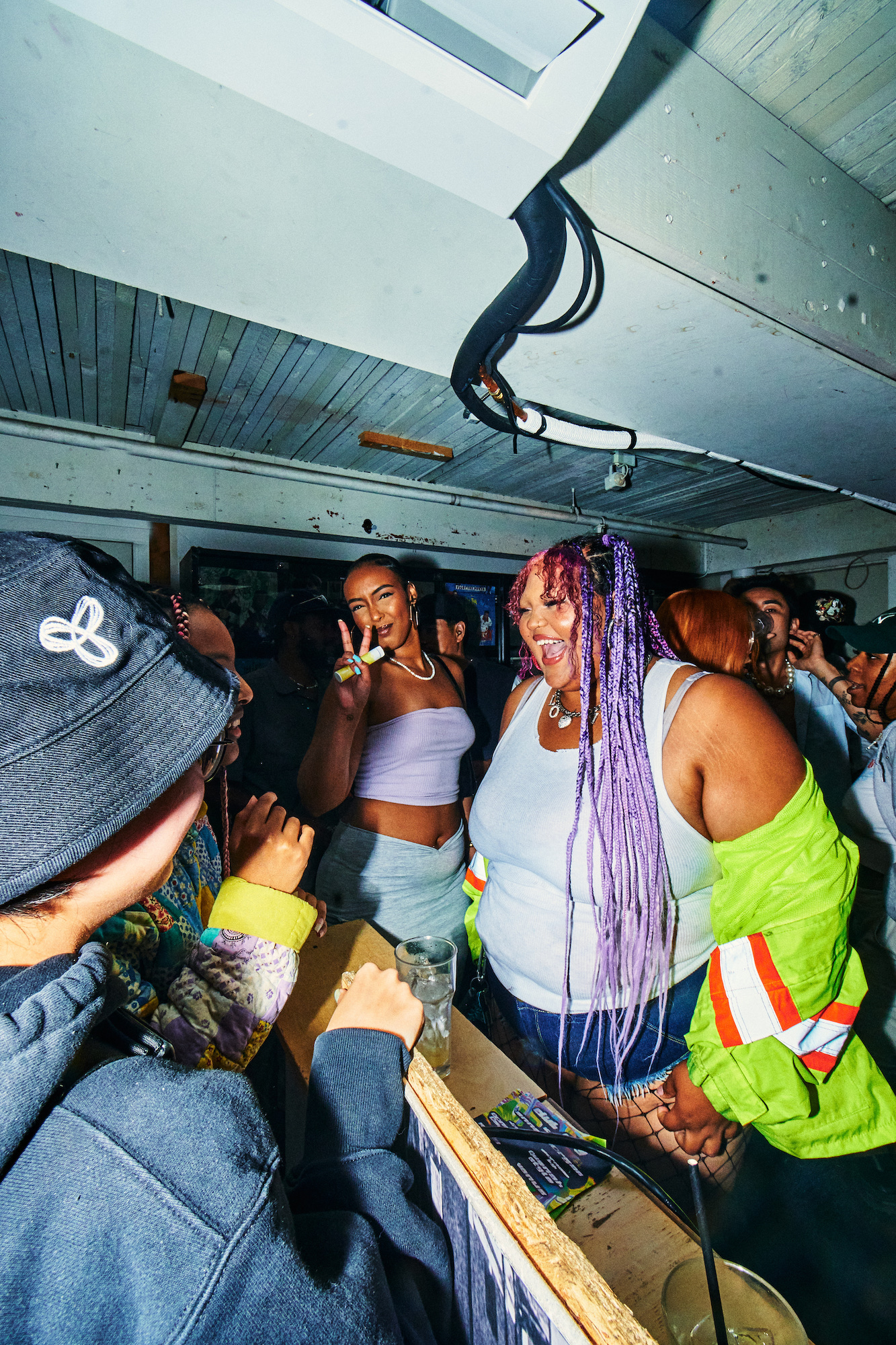
'TNA', MADE BY WE, July 2022 Photo: Simone Chnarakis
The members of the MadeByWe collective – Hafiz Akinlusi, Vanessa Fajemisin, Mada Phiri, and Kene Esonejo – have embarked on projects that not only provide a safe space for BIPOC youth in the Greater Vancouver area but also offer these communities both intangible and tangible learning opportunities. They remind me that unity – especially BIPOC communal bonds – has been and continues to be a force for powerful, positive social change and innovation.
I have continued to follow their events, including a listening party at The Polygon Gallery featuring Sadboy Denzel, and Welcome to Blasia, which addressed the under-articulated solidarity and creative collaborations between members of the Black and Asian diasporic communities.
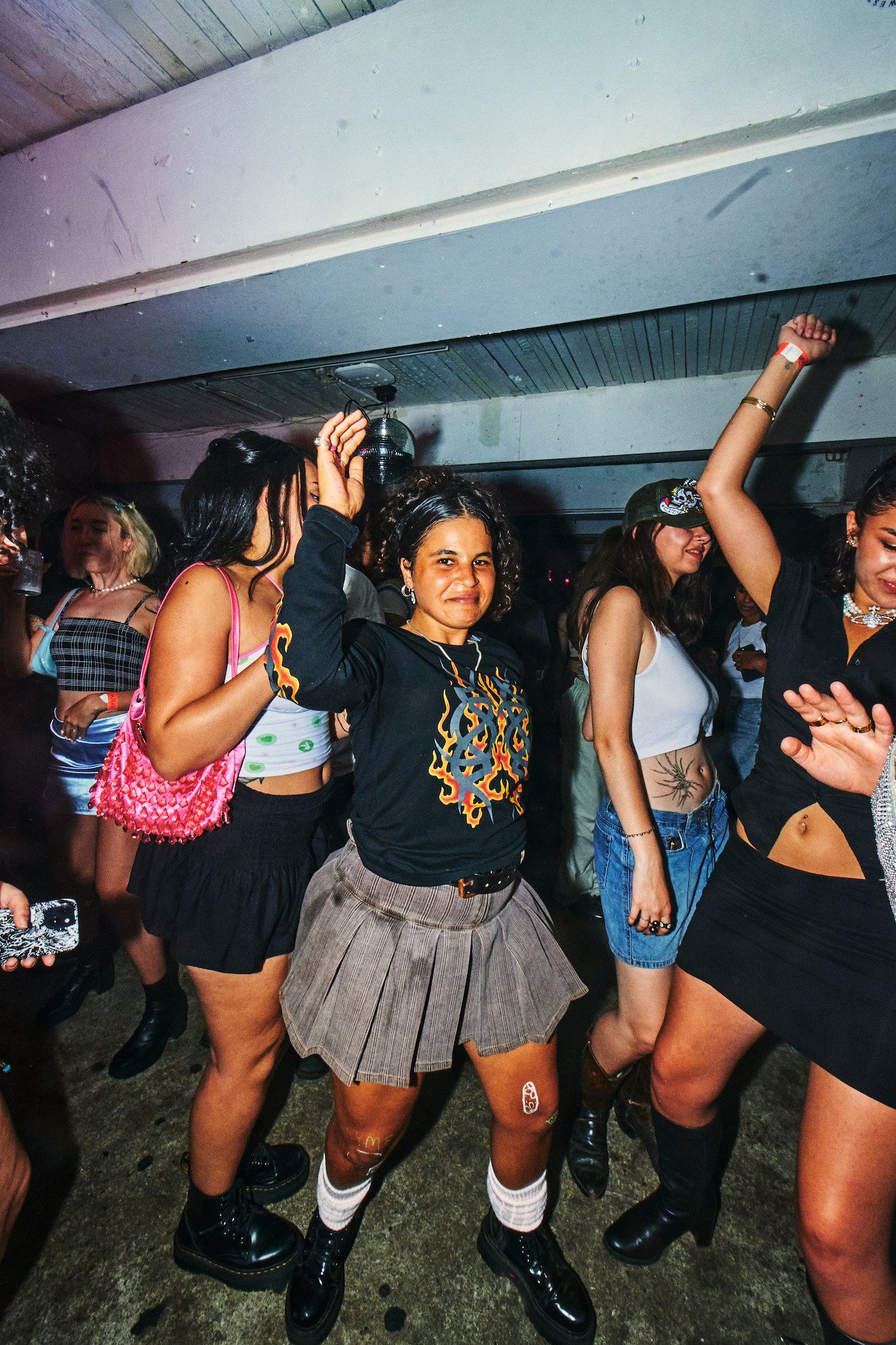
'TNA', MADE BY WE, July 2022 Photo: Simone Chnarakis
Beyond parties, MadeByWe’s community-building extends to transfers of knowledge regarding Black Canadian history, Black fundraising, and entrepreneurial empowerment. I think of the “Set It Off” flea market, which invited young entrepreneurs and makers to sell crafts, clothing, food, artworks, and services, raising funds for the Black Vancouver Therapy and Advocacy Fund while also providing a valuable networking opportunity.
In a city where Black communities are diverse and dispersed, MadeByWe insists on not only building but sustaining visibility and closeness. The collective undertakes all its projects with deep intentionality. I hope that Black young people receive their message of reassurance – as I have – and take comfort in knowing that they will find their people at any MadeByWe event.
Diagonals
Collection
Diagonals is a space for projects that exist adjacent to The Polygon Gallery’s onsite exhibitions and programming, both past and present.
Lunoryza
House of Rice
“The incredible elasticity of your own self”
Elliott Ramsey
Unfixed and Expansive
Elliott Ramsey