Unfixed and Expansive
In this video, The Polygon’s curator Elliott Ramsey offers a guided tour of the exhibition Interior Infinite.
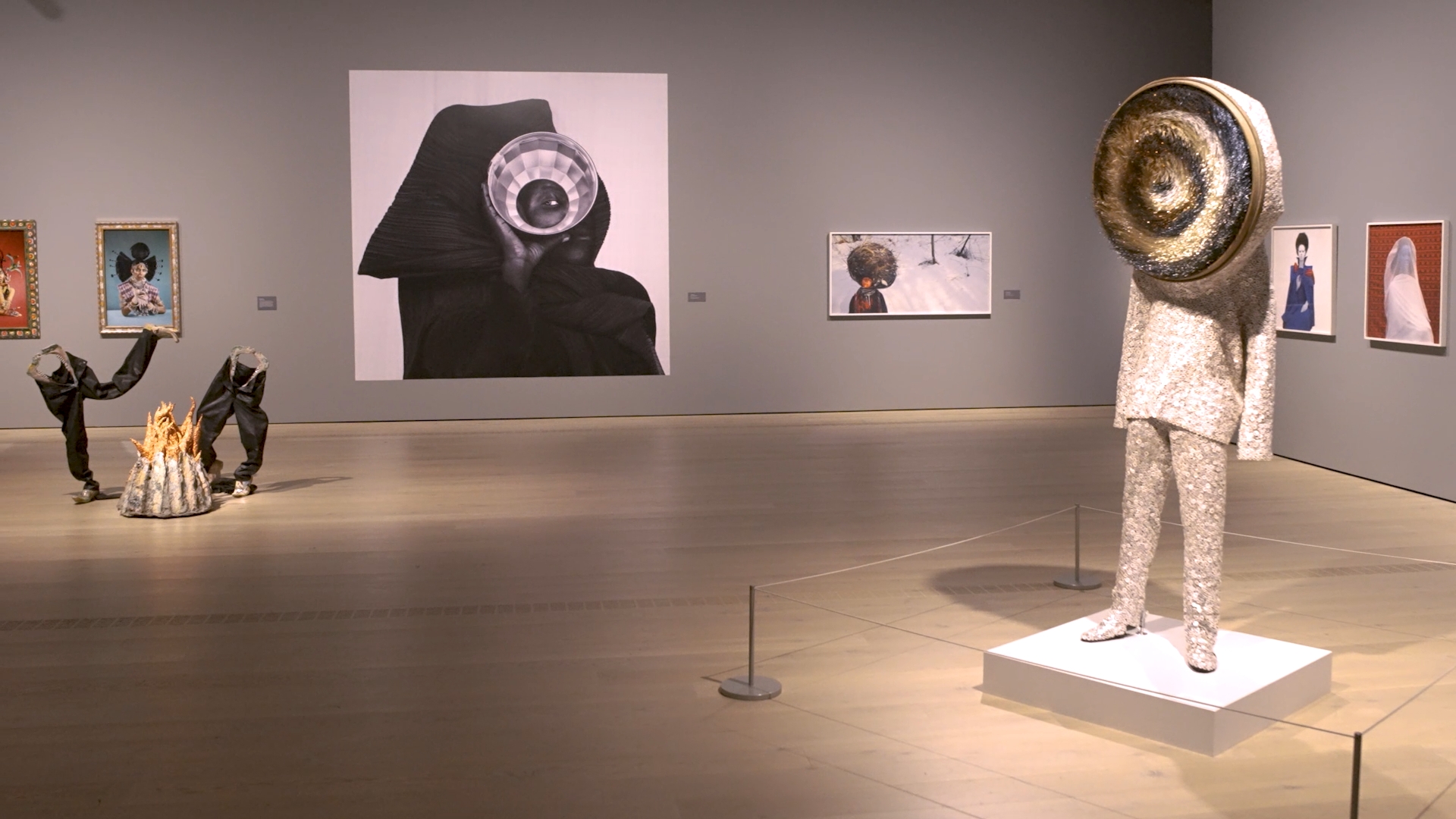
Read the video’s full transcript here
View Project
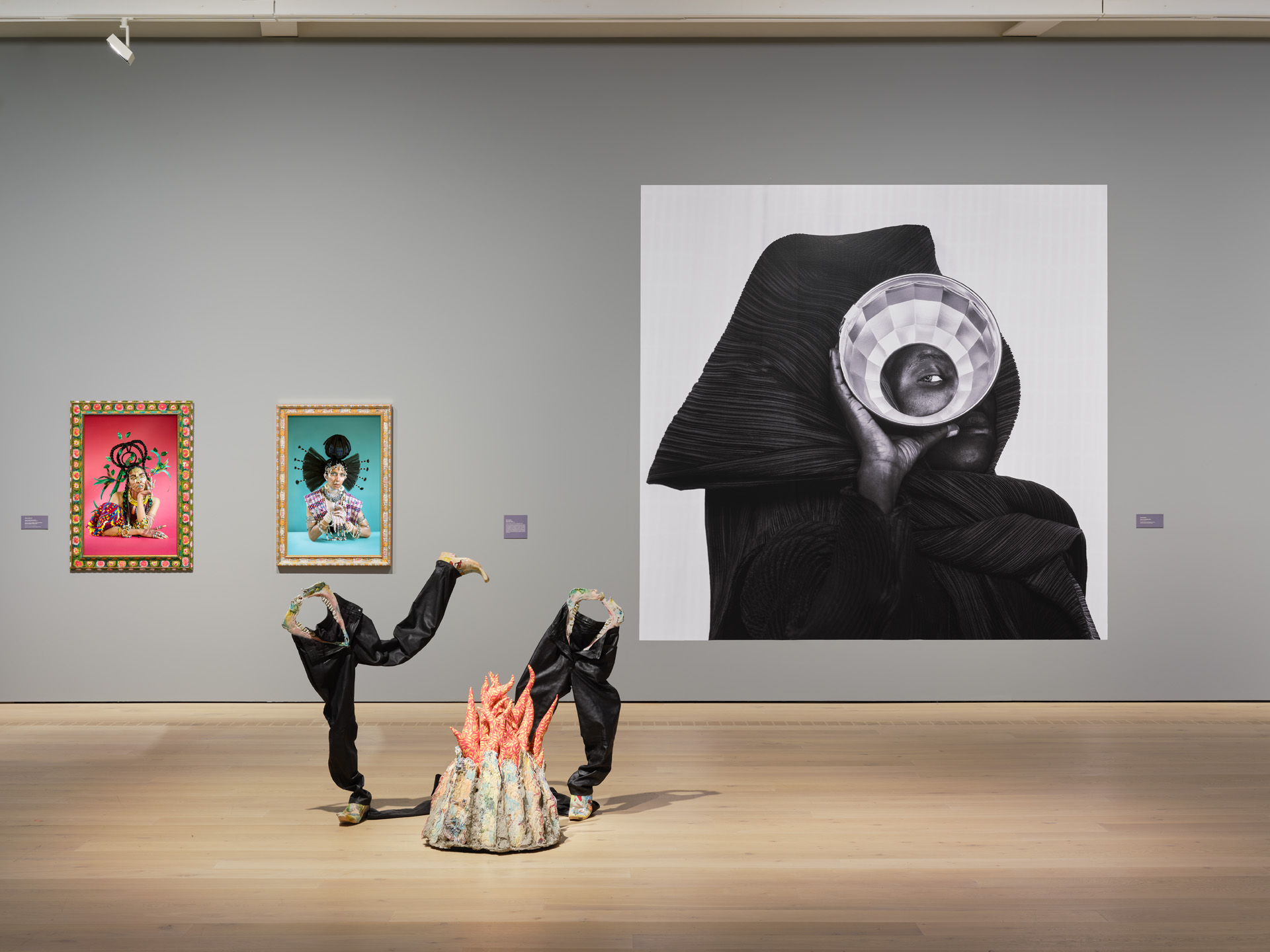
A note from the curator – The exhibition Interior Infinite began as a way of processing rage and grief. Amid a global pandemic and the ongoing murder of Black civilians by police officers in the United States, there were clamours for society to “get back to normal”. As videos of George Floyd’s killing spread online, graphically representing decades – even centuries – of anti-Black violence, “normal” seemed, to me, like a terrible thing to return to.
In the Lenten festival of Carnival, normality is suspended, if only temporarily. Social roles are inverted, and new orders are imagined. Masquerade facilitates this transformation. When you are allowed to be anything, who do you become? The significance of this celebration is profound in the history of enslavement, where it was one of the only days of respite that enslaved people were afforded, and it has blossomed among formerly colonised and Afro-diasporic cultures into a whole range of nuanced, vibrant cultural traditions.
Curating this exhibition was, in some ways, a carnivalesque response to what was happening at the time: transmuting pain and sorrow into something joyful and resplendent, turning it on its head. But further to that, the exhibition was formative for me as a curator of photography. It posed foundational questions around representation, consent, agency, and visibility that continue to influence my thinking and research.
How do we depict that which is habitually overlooked? How can we give form to what cannot be readily seen? Perhaps these are the broad challenges that art, in general, grapples with every day. In Interior Infinite, however, the redress is more specific. Costume, make-up, and masquerade provide a prismatic, mutable, multifaceted understanding of the selves that we all contain. It was, and is, an exhibition about possibility. When we are allowed to be anything, what can we become?
— Elliott Ramsey
Video credits
Text and narration by Elliott Ramsey
Cinematography and editing by Everett Bumstead